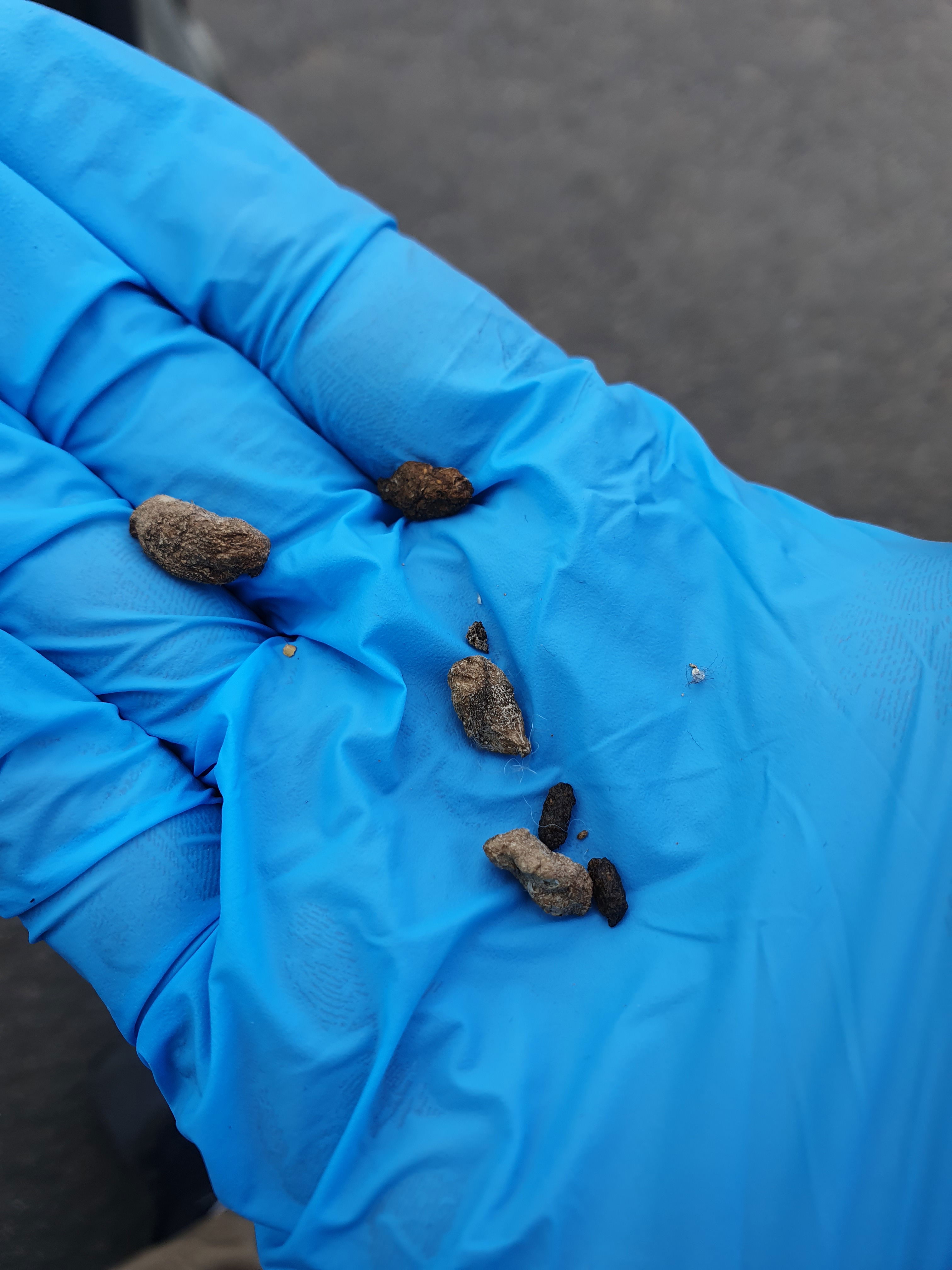
How to Identify Squirrel Droppings
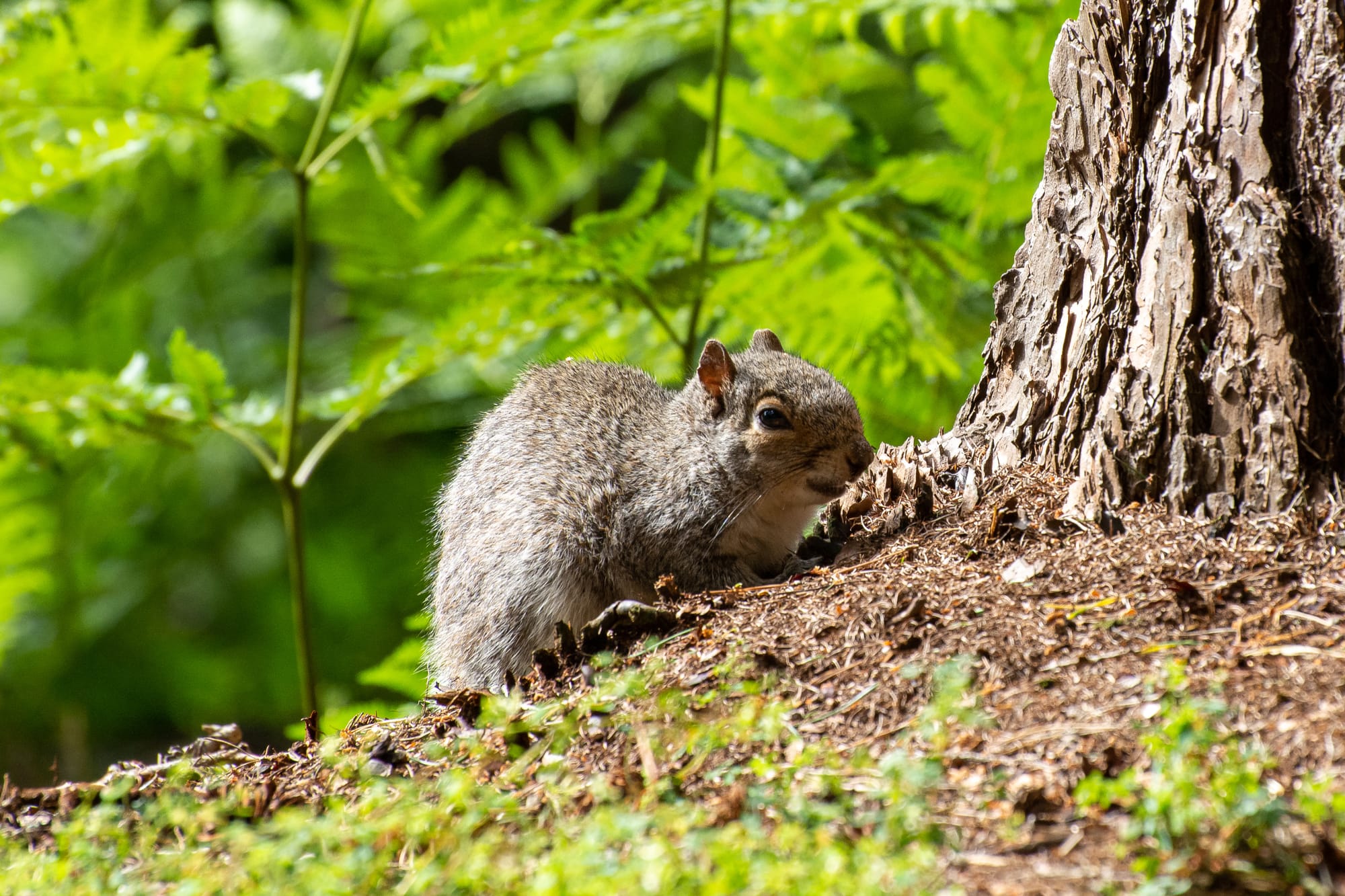
Finding droppings in your loft, attic or roof space is often one of the first signs that an animal has gained access to your property. Grey squirrels are a common cause of problems in roof spaces, but their droppings can sometimes be mistaken for those of rats and other rodents. Knowing how to identify squirrel droppings can help determine what is living in your property and whether professional pest control is required.
What Do Squirrel Droppings Look Like?
Grey squirrel droppings are generally dark brown to black when fresh, becoming lighter and drier as they age. They are usually:
- Approximately 8–12 mm long
- Oval or slightly elongated in shape
- Rounded or slightly pointed at the ends
- Dark brown or black when fresh
- Lighter brown or grey as they become older and dry out
The exact appearance can vary depending on the squirrel's diet and the age of the droppings. Older squirrel droppings found in loft spaces may become extremely dry and brittle, particularly where they have been present for months or years.
Squirrel Droppings vs Rat Droppings
One of the most common identification problems is distinguishing squirrel droppings from rat droppings. Both can be found in lofts and roof spaces and there can be some overlap in their appearance. Rat droppings are typically dark, elongated and often more pointed at the ends. Squirrel droppings tend to be slightly more rounded or oval. However, droppings alone shouldn't always be used to confirm the species. Other evidence should also be considered, including:
- Gnawing damage
- Footprints and tracking marks
- Nesting material
- Entry points around the roof
- Damage to insulation
- Sounds from within the loft
- The location and distribution of droppings
An experienced pest controller will normally assess several different signs before confirming whether squirrels, rats or another animal are responsible.
Where Are Squirrel Droppings Usually Found?
Squirrel droppings are commonly discovered in lofts, attics and roof spaces because grey squirrels frequently enter buildings at roof level. Typical locations include:
- Around roof timbers
- On top of loft insulation
- Close to nesting areas
- Around stored belongings
- Near roof entry points
- Along frequently used routes through the loft
Large accumulations don't necessarily mean that there are currently lots of squirrels present. Droppings can remain in an undisturbed loft for many years after the original squirrel problem has been resolved.
Are Old Squirrel Droppings a Sign of an Active Infestation?
Not necessarily. This is particularly important when inspecting older properties. Dry, faded droppings may relate to historic squirrel activity rather than a current infestation. Previous repairs to roof tiles, soffits, fascia boards or other entry points may already have prevented squirrels from returning. For this reason, finding squirrel droppings should ideally be considered alongside evidence of recent activity. Fresh droppings, recent gnawing, disturbed insulation, noises from the roof and newly created entry points are much stronger indicators of an active squirrel problem.
Signs of Squirrels in a Loft
Droppings aren't the only evidence to look for. Grey squirrels living within a roof space may also cause:
- Scratching or movement noises, particularly during daylight hours
- Disturbed or compressed loft insulation
- Gnawing to timber
- Damage to electrical cables
- Nesting material
- Damage around fascia boards or soffits
- Enlarged gaps around roof tiles
- Visible squirrel entry and exit from the roof
Because squirrels are powerful rodents, relatively small defects around a roof can sometimes be enlarged to create an access point.
Can Squirrel Droppings Be Dangerous?
As with other animal waste, squirrel droppings should be treated as potentially contaminated material. Avoid unnecessarily handling or disturbing accumulated droppings, particularly where large quantities are present. Dry droppings and contaminated nesting material can produce dust when disturbed. Where significant contamination is present, appropriate protective equipment and cleaning procedures should be used.
Squirrel Droppings in Your Loft?
If you've discovered what you believe to be squirrel droppings in your loft, identifying the animal responsible is only part of the investigation. It is also important to determine:
- Whether the activity is current or historic
- How the animal gained access
- Whether additional entry points are present
- Whether any damage has occurred
- What proofing work may be required to prevent future access
At KO Pest Control, we provide professional squirrel inspections and control throughout Taunton, Bridgwater and surrounding areas of Somerset. Our inspections look beyond the droppings themselves to establish the likely species, evidence of current activity and potential access points around the property. If you're unsure whether the droppings in your loft have been caused by a squirrel, rat or another pest, professional identification can help determine the appropriate next step.
Frequently Asked Questions
What colour are squirrel droppings?
Fresh squirrel droppings are normally dark brown or almost black. As they age and dry, they can become lighter brown or grey.
How big are squirrel droppings?
Grey squirrel droppings are commonly around 8–12 mm long, although size and appearance can vary.
Do squirrel droppings look like rat droppings?
They can look very similar. Squirrel droppings are often slightly more rounded, while rat droppings can appear more elongated or pointed. Other evidence should be considered before identifying the species.
Does finding squirrel droppings mean squirrels are still in my loft?
No. Droppings can remain in loft spaces for years. Older, dry droppings may simply indicate historic activity.
What should I do if I find squirrel droppings in my loft?
Avoid unnecessarily disturbing large accumulations. Look for other signs of activity and consider having the loft and exterior of the property inspected to establish whether squirrels are currently gaining access.